Published in Market Analysis
US Beef Prices Break New Records as the Cattle Herd Shrinks
Beef prices in the United States have climbed to record highs this summer, driven by the smallest cattle herd in decades and strong demand, with knock-on effects for global meat trade.

Martina Osmak
Director of Marketing
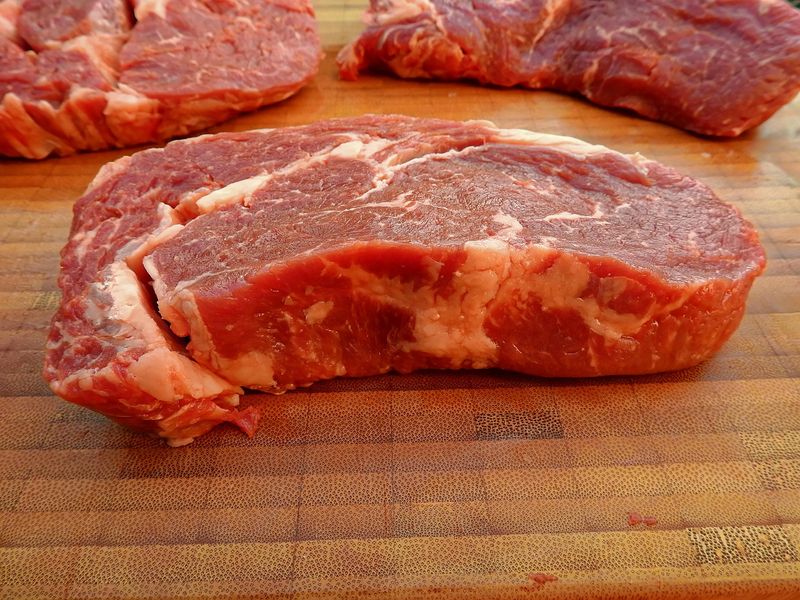
Beef in the United States has become more expensive than ever this summer. Prices have set fresh records, and most experts expect them to stay high for some time. For global buyers and sellers, the story is not only about American grills. It is also about how tight US supply is starting to move meat trade around the world.
A "perfect storm" of low supply and high demand
Economists describe the current US beef market as a "perfect storm". Supply is very tight, while demand keeps growing.
The price of ground beef in the United States was up almost 13% in May compared with a year earlier, according to data from the Federal Reserve Bank of St. Louis. Over the past 15 years, the cost of ground beef has more than doubled. The US Department of Agriculture (USDA) expects beef prices to rise another 10% in 2026, which is faster than general inflation.
There are two sides to this pressure:
On the supply side, the United States now has a historically low number of beef cows. Years of drought, plus higher costs for fuel, fertilizer and feed, have pushed ranchers to reduce their herds instead of growing them.
On the demand side, American shoppers have moved back toward red meat as a protein of choice, keeping demand strong even as prices climb.
Weather is making the supply problem worse. Forecasters expect a hot and dry year in several parts of the US where a lot of cattle are raised. Less rain means less grass, so some producers have had to cut herd numbers to have enough feed for the animals they keep.
The July 4 cookout shows the pressure
The strain is easy to see in the American summer barbecue. Each year the American Farm Bureau Federation measures the cost of a Fourth of July cookout for 10 people.
In 2026 that cookout costs $73.82, or about $7.38 per person. That is up $2.90, or 4%, from last year, and it is the highest total since the survey began in 2016. The increase is close to the general US inflation rate of 4.2% over the 12 months ending in May.
Beef stood out in the basket. Two pounds of ground beef reached $14.06, up 5.5% from a year ago and the highest beef price in the survey's history. Other proteins rose too, but by less:
Ground beef (2 lb): $14.06, up 5.5%, a record for the survey
Chicken breasts (2 lb): $8.06, up 3.5%
Pork chops (3 lb): $14.79, up 4.7%, but still below the 2024 level
Prices also vary by region inside the US. The West is the most expensive place to hold a cookout at about $80 for 10 people. The Northeast was the cheapest at $71.35, followed by the Midwest at $71.45 and the South at $72.08.
It is worth noting that higher shelf prices do not mean higher profits for producers. The Farm Bureau points out that American farmers and ranchers receive less than 6 cents of every dollar spent on food. Most of the price reflects costs after the farm gate, such as processing, packaging, transport and retail.
Why supply cannot recover quickly
The core issue is the shrinking US cattle herd, and it cannot be fixed fast.
When prices are this high, many ranchers find it more attractive to sell animals now rather than hold them back to expand the herd. Even when producers do decide to grow their herds, biology sets the pace. It takes about two years from the birth of a calf until the animal is ready for slaughter.
So even if rebuilding started today, more American beef would not reach the market for a long time. That is a key reason analysts expect prices to remain firm.
What it means for global meat trade
Tight US supply does not stay inside the United States. It shapes trade flows that matter to buyers and sellers everywhere.
US beef exports have fallen since 2022, mainly because high prices and low inventories left less product available to ship abroad. At the same time, strong domestic demand and record prices can pull more imported beef into the US market.
Recent trade data also showed how unusual the market has become. The USDA reported a sudden jump in US beef export sales, with net sales for 2026 delivery reaching 126,062 metric tons in the week ending June 25, a marketing-year high and almost 500% above the week before. The agency later said the figure included deals from earlier months that were reported late. Among them were large volumes booked to Chile and Italy that, on their own, would beat previous annual US export records to those countries. Some traders questioned the numbers, which shows how carefully export data now needs to be read.
For international buyers and sellers, a few things are worth watching:
Whether high US prices continue to slow American exports and open space for other suppliers in shared markets.
How much imported beef the US pulls in while its herd stays small.
Reporting quirks in official trade data, which can make weekly figures look larger or smaller than the real trend.
The clear signal for now is that the United States, one of the largest beef producers in the world, is producing less and paying more. That imbalance is likely to keep influencing global prices and trade decisions well beyond this grilling season.