Published in Industry Insights
Too Wet in America, Too Dry in Europe: A Riskier World for Feed and Meat
Heavy rain is damaging crops in the US Midwest while drought shrinks harvests in Europe, and these opposite problems point to the same outcome: tighter, more expensive animal feed and a more volatile meat market.

Martina Osmak
Director of Marketing
Two of the world's biggest feed-grain regions are having opposite weather years. In the United States Midwest, the problem is too much rain. In much of Europe, the problem is too little. For anyone who buys or sells meat, the lesson from a global seat is the same: feed is getting tighter and costlier, and no single origin looks like a safe bet this season.
A tale of two harvests
Corn and soybeans are the backbone of animal feed. When these crops struggle, the cost of raising pigs, cattle and poultry tends to rise, and meat prices often follow with a delay.
This year the two leading production zones are stressed in mirror-image ways. American farmers are fighting standing water and crop disease after repeated heavy rain. European farmers are watching fields dry out after months of heat and drought. Both roads lead to smaller or lower-quality grain supplies, which is why buyers on every continent should pay attention.
The US problem: too much water
Parts of the US Corn Belt have been soaked. Field reports from Illinois in late August described flooded ground returning to areas that had already been hit earlier in the season, with standing water killing or stressing previously healthy plants. That damage brings incomplete grain fill, lower seed weights and quality problems.
Wet, warm conditions also help disease spread. Scouts in Illinois reported a mix of problems moving through corn and soybean fields as the crop neared maturity.
In soybeans: sudden death syndrome, Septoria brown spot, and suspected red crown rot.
In corn: gray leaf spot, northern corn leaf blight, tar spot, and areas of prematurely dead plants linked to suspected crown or stalk rot.
The national numbers reflect the strain. USDA's weekly crop progress report rated the US corn crop 57% good to excellent as of late August, down 3 points in a week and 14 points below the same time last year. About 17% of the crop was rated poor to very poor. A crop that is still standing is not the same as a crop that is healthy, and the late-season decline points to a smaller or more uneven US harvest than earlier hopes suggested.
The European problem: too little water
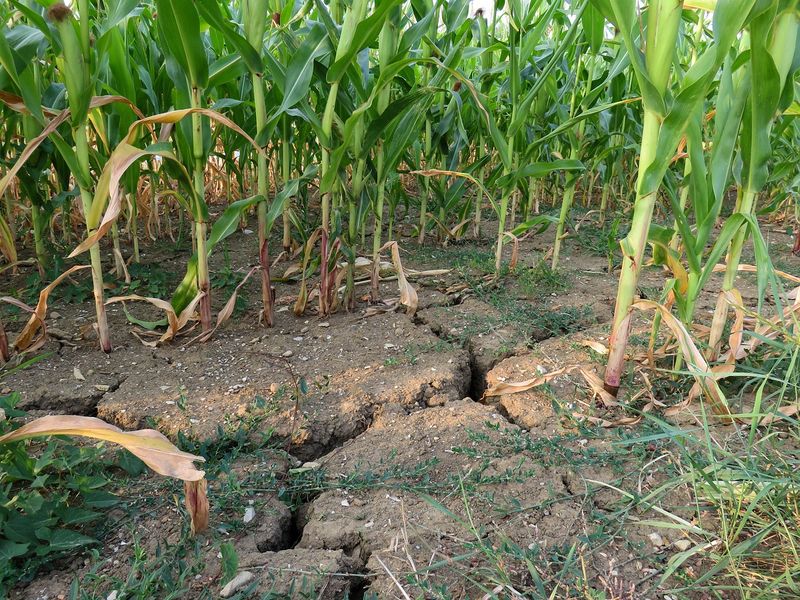
Europe has the reverse trouble. The European Commission's crop monitoring service said persistent heat and severe water shortages have badly hurt summer crops across western and central Europe, cutting yields and, in the worst areas, causing likely crop failure.
The damage is widespread. Severe impacts were reported in several countries, while others sit on alert.
Severe impact: France, southern Germany, northern and central Italy, Austria, Czechia, Slovakia, Hungary, and western Romania.
Moderate impact: the Benelux countries, Slovenia, and Croatia.
On alert from dry conditions: southern Ireland, northern Germany, Denmark, southern Poland, western Ukraine, and western Bulgaria.
EU forecasters cut expected yields for all summer crops to as much as 14% below the five-year average. Grain maize, which in Europe is grown mostly for animal feed, has been hit hardest. France, the region's main corn grower, is heading for one of its smallest crops in decades, with some analysts expecting output to fall by roughly half.
Same result: tighter and pricier feed
Here is where the two stories meet. Whether the cause is flood or drought, the effect on the feed market is similar. Less home-grown grain means more imports, higher costs, and more competition for every available tonne.
European feed makers are already feeling it. The feed industry group FEFAC said the maize shortfall will squeeze the supply of both grain and silage in the months ahead, and it called for emergency measures to keep feed flowing.
The EU is expected to need more than 7 million tonnes of extra maize imports in 2026/27, lifting total maize imports above 26 million tonnes, mostly from Ukraine, the United States, and Brazil.
EU maize imports were already running about 41% higher than a year earlier by the end of August.
FEFAC estimates the drop in home forage will add more than 1 billion euros in extra soy-product sourcing costs in 2027, with no guarantee the supply will even be there.
European corn prices rallied hard over the summer, rising sharply from the June low to the July high.
There is a twist worth watching. Europe wants to buy more American maize to cover its own shortfall, but the US crop is under its own weather cloud. When both a major exporter and a major importer are stressed at the same time, prices tend to stay nervous and swing more easily on each new weather forecast or crop report.
What buyers and traders should watch
For meat buyers, sellers and procurement teams, the takeaway is about risk, not panic. Feed is the single biggest cost in raising most animals, so pressure on grain and oilseeds slowly works its way into the price of pork, poultry, beef and dairy.
A few things are worth monitoring in the weeks ahead. Watch how the final US harvest lands as fields dry down, since quality and yield are still uncertain. Watch EU import demand and the flow of grain from Ukraine, which is central to Europe's feed balance. And watch how quickly higher feed costs pass through to livestock producers who are already dealing with weak prices for some meat products.
The core message is simple. Too wet and too dry are producing the same market: one where feed is scarcer, costs are higher, and relying on a single region for supply carries more risk than usual. Spreading sourcing across origins and staying close to fresh crop data will matter more than betting on any one harvest.