Published in Industry Insights
One Backyard Flock on Lewis Ends Britain's Bird Flu Free Summer
Great Britain confirmed its first bird flu case of the 2026/27 season in a small backyard flock on the Isle of Lewis, and our view is that the case is tiny for supply but is the signal the poultry trade has been waiting for.

Martina Osmak
Director of Marketing
MeatBorsa's take
This section is our reading of the news, not reported fact. The confirmed figures follow below.
The case itself is small. One backyard flock on a remote Scottish island will not move chicken supply in Britain by a single pallet. What matters is the date. The country had a bird flu free summer, and as of 2 October it does not. For buyers of British poultry, the question is no longer whether the season starts, but how bad it gets.
We think the sensible reaction is calm preparation, not panic. Nothing in this case points to a shortage. But the last full season in the UK brought 100 confirmed cases, and a processor's accounts for 2025 show what a heavy flu year can do to a business even when shelves stay full. Buyers who source from UK plants should ask now about contingency supply, contract flexibility and alternative origins, while the market is quiet and the questions are cheap.
What we assume, and why we could be wrong
- We assume this stays a low-volume event for now. Autumn cases tend to build as wild birds move, so the weeks ahead matter more than this one flock. If cases stay isolated into November, our concern is overdone.
- We assume commercial farms remain well protected by biosecurity. If the virus reaches larger commercial units, culling volumes and processing disruption would change the picture quickly.
- We assume price effects stay small in the short term, because one backyard flock removes almost no meat from the market. If several commercial sites are hit in the same weeks, we would expect tighter supply of British chicken and firmer offers from competing origins.
- We assume processors carry their own cost risk. If margins are already thin, as one large processor's results suggest, a bad season can show up in plant closures or reduced lines before it shows up in shelf prices.
What happened
Highly pathogenic avian influenza, type H5N5, was confirmed on 2 October 2026 at a premises in Ness, on the Isle of Lewis in Scotland. The Scottish Government lists it as case AIV 2026/20. A 3 km protection zone and a 10 km surveillance zone were put in place around the site.
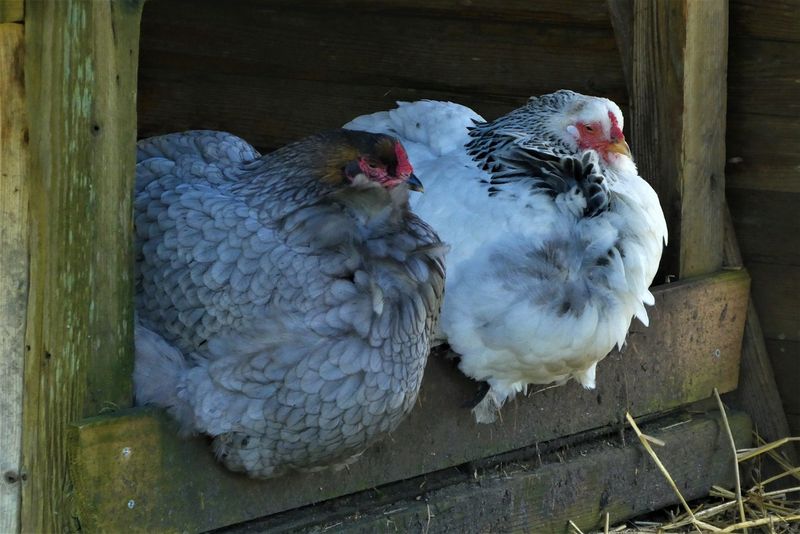
FarmingUK reported on 3 October that this is the first premises outbreak in the UK for the 2026/27 reporting season. Poultry News reported on 5 October that the affected flock is a small backyard flock of chickens, and that the flock size was not given. FarmingUK also noted that other captive birds, including ducks and geese in backyard flocks, are covered by the same reporting.
Great Britain had declared itself free of the disease in poultry on 18 May 2026, and its Avian Influenza Prevention Zones were lifted on 4 June 2026. FarmingUK says that status has now changed with this outbreak.
Poultry News says wild bird risk in Great Britain is assessed as medium, and risk to poultry with good biosecurity as low. The British Egg Industry Council has urged high biosecurity standards, including strict separation between different animal types on mixed farms.
The numbers that matter
- 2 October 2026: H5N5 confirmed in Ness, Isle of Lewis (Scottish Government, case AIV 2026/20).
- 100 confirmed H5N1 cases across the UK in the 2025/26 season, 82 in 2024/25 and 207 in 2022/23 (FarmingUK).
- £205.2 million turnover for Bernard Matthews Foods in 2025, down from £240.5 million in 2024, with an operating loss of £2.2 million against a £5.6 million profit the year before. Directors pointed to avian influenza and the underperformance of a frying line (Poultry News, 29 September).
The Bernard Matthews figures are one company's accounts, and the directors named two causes, not only bird flu. We use them as an example of cost pressure, not as a measure of the whole industry.
What we are watching next
We are watching whether more cases follow on the mainland over the next three to four weeks, and whether any are on commercial sites. We are also watching offers for UK chicken against other European origins, and any change in how buyers write flu clauses into autumn contracts.
Sources
H5N5 bird flu confirmed on Isle of Lewis - Poultry News
UK's first bird flu outbreak of 2026/27 confirmed on Isle of Lewis - FarmingUK News
Avian influenza (bird flu) outbreaks - Scottish Government
Bernard Matthews Foods turnover falls £35m as avian flu hits performance - Poultry News