Published in Industry Insights
Livestock Theft Goes Organised: From 233 Cattle in Germany to a TV Star's Stolen Flock
Two very different thefts, a 233-head cattle spree in eastern Germany and 11 sheep taken from Jeremy Clarkson's farm in England, point to the same trend: as animal values stay high, livestock has become a target for organised crime.
Martina Osmak
Director of Marketing
For years, farm security was mostly about disease, biosecurity and animal welfare. Now a different risk is growing across Europe. The animals themselves have become the prize. Two recent thefts, on very different scales, show how far the problem has moved.
Two thefts, one worrying pattern
In eastern Germany, whole herds have vanished from farms in a matter of weeks. In England, thieves took part of a flock from one of the country's most famous farms. One case looks like organised crime on an industrial scale. The other looks like a smaller, local raid. Together they raise the same question for anyone in the livestock trade: when does animal theft stop being a rural nuisance and start becoming a business?
Germany: whole herds vanish overnight
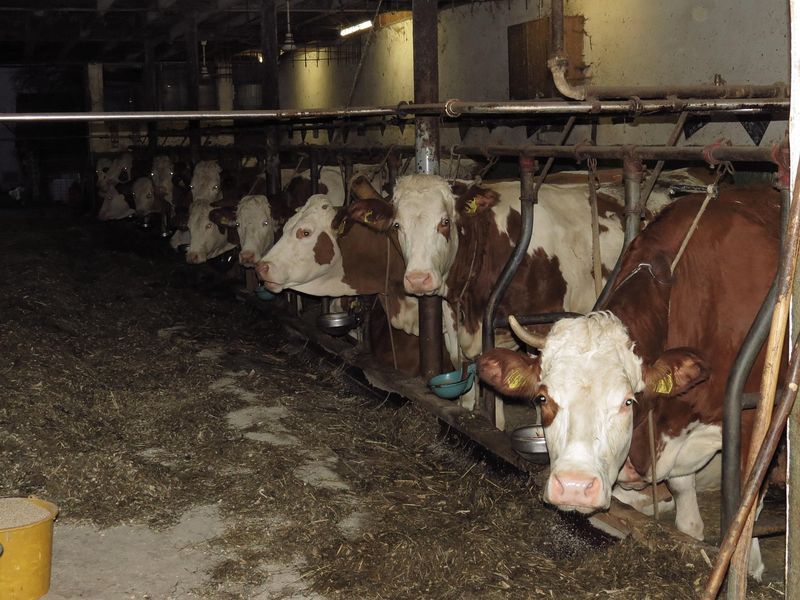
The German state of Brandenburg has become a hotspot for large-scale cattle theft. Since March 2026, police in the region have counted four confirmed cases in which 233 animals disappeared, with losses estimated at around 337,000 euros.
The individual cases show how bold the thieves have become. Euronews reported several examples from Brandenburg:
In Raddusch, a farmer found his herd of 48 cattle gone from the pasture, a loss of about 75,000 euros.
Near Herzberg, 74 cattle were taken two weeks earlier, with lorry tracks left at the scene.
In Falkenberg, thieves drove what investigators believe was a 40-tonne articulated lorry up to a barn and loaded 69 young female calves.
Police believe these are professional, organised gangs. The raids happen at night. To hide the animals' origin, ear tags are removed or swapped for forged ones, and in some cases sedatives appear to have been used to keep the animals quiet during loading.
Because livestock in Germany is centrally registered, investigators suspect many stolen animals are moved to Eastern European countries or outside the European Union, hidden in closed lorries that are not licensed to carry livestock. In response, Brandenburg has set up a dedicated investigation unit and stepped up checks on animal transports.
England: even a famous flock is not safe
The second case is smaller but made headlines because of who it hit. Jeremy Clarkson, the television presenter behind Diddly Squat Farm in Chadlington, Oxfordshire, discovered that 11 of his EasyCare sheep had been stolen. He noticed only when he counted the flock and found 16 of his 27 animals left.
Police believe the sheep were taken during a night raid at some point over the previous ten days. The animals are worth more than 2,000 pounds at market. Thames Valley Police are investigating, no arrests have been made, and Clarkson had a message for the thieves: put them back.
The story landed because it showed that livestock theft can reach any farm, large or small, famous or not.
Why livestock has become a target
The common thread is money. Livestock values have stayed high across much of Europe, so a lorry full of cattle or a trailer of sheep is now a serious payday.
Breeding animals are especially attractive to thieves. They can represent years of careful genetic selection and heavy investment, and replacing them is often far harder than simply recovering their market price. Animal theft is also part of a wider rise in what is now called "farm crime", which includes stealing expensive machinery and the GPS units from tractors.
What owners and traders can do
There is no single fix, but there are sensible steps. Across Germany, Ireland and the United Kingdom, farmers are turning to technology and ecord-keeping to protect their stock and their trade.
Improve on-farm security with cameras, better barn and yard lighting, and shared warning networks between neighbours.
Keep clear, up-to-date records of animals and their identifiers, so a theft can be reported and traced quickly.
When buying, check the origin and ownership history of the animals, and be cautious about deals that cannot show where the stock came from.
Prefer trade channels where the seller's identity, ownership and paperwork are documented and verified.
Strong traceability and verified ownership will not stop every theft. But they make stolen animals harder to sell, and they give honest buyers more confidence that the livestock they pay for is really theirs to buy. As thieves get more organised, the trade's best defence is to be better organised too.