Published in News
JBS Workers in Colorado Move Closer to Historic Strike
Nearly 3,800 workers at JBS’s largest U.S. beef plant may walk out over safety, wages, and working conditions.

Martina Osmak
Director of Marketing
Strike Threat Grows at Major U.S. Meat Plant
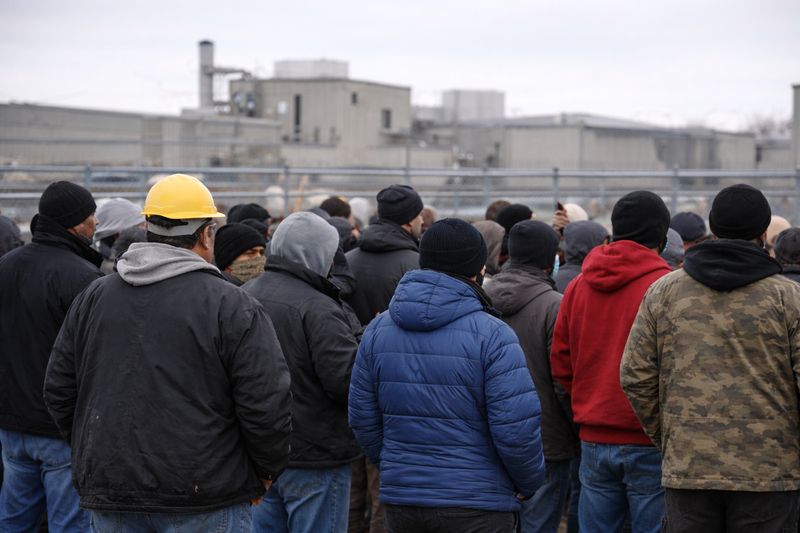
Workers at a large meatpacking plant in Greeley, Colorado, are preparing for a possible strike that could become the first major walkout in the U.S. meatpacking industry in decades.
Almost all of the plant’s 3,800 unionized employees have registered for a strike fund. Earlier this year, 99% of workers voted to authorize a strike if negotiations with the company fail.
The workers are represented by United Food and Commercial Workers (UFCW) Local 7. Their previous contract expired in July, and the union has been operating under a temporary extension while talks continue.
If the union ends that extension, a strike could begin within seven days.
Why Workers Are Angry
Pay is one issue, but many employees say the bigger problem is safety and working conditions.
Workers say production speeds have increased in recent years. According to union representatives, the plant now processes about 420 cattle per hour, compared to about 390 previously.
Employees say the faster pace makes the work more dangerous.
One worker on the bargaining committee, who has spent more than two decades at the plant, explained that even small equipment problems can create serious risks. For example, a knife grinder used to sharpen cutting tools reportedly stayed broken for weeks.
Sharp tools are essential for safe work in meat processing. When tools are dull, workers must use more force, increasing the chance of injury.
Pressure on Workers During Shifts
Workers also say strict rules around breaks and production targets create additional stress.
Employees must remove protective gear before going to the bathroom and put it back on when they return. The process can take five to ten minutes, but workers say they can be disciplined if they miss too many animals on the line during that time.
Union leaders argue that the system prioritizes speed over worker safety.
They also say the wage increases offered by the company — roughly 60 to 90 cents per hour depending on the proposal — do not match the rising cost of living in Colorado.
Immigrant Workforce Faces Additional Fears
The Greeley plant has a very diverse workforce. Union officials say workers there speak about 57 different languages.
Many employees are immigrants who have legal status through asylum programs or Temporary Protected Status (TPS).
Recently, some workers from Haiti feared they could lose their legal work status due to changes proposed by the U.S. government. A federal judge temporarily blocked those changes, but uncertainty remains.
Despite those concerns, many workers still supported the strike vote.
Some union representatives say the current political climate makes immigrant workers feel especially vulnerable, which can make it harder for them to speak out about workplace problems.
Long History of Problems at the Plant
The Greeley facility is one of the largest beef processing plants in the United States.
JBS, the Brazilian multinational company that owns the plant, operates 132 facilities and employs more than 100,000 workers in the U.S.
But the company has faced criticism before.
Past issues connected to the plant include:
COVID-19 outbreaks during the pandemic that killed several workers
Child labor violations involving a cleaning contractor at multiple facilities
A recent lawsuit from workers who say they were recruited under misleading promises about housing and job conditions
The lawsuit claims some migrant workers ended up living in overcrowded housing while doing physically demanding jobs on the processing line.
JBS has said it takes worker safety seriously and wants to reach a fair agreement with employees.
Political Attention and Corporate Influence
The labor dispute has also attracted political attention.
Two U.S. senators from Colorado have expressed support for the workers during negotiations. However, union representatives say they have not heard from the local Republican congressman whose district includes the plant.
At the same time, critics have pointed to JBS’s political connections. One of its subsidiaries donated $5 million to Donald Trump’s presidential inauguration, and the company recently received approval to list its shares on the New York Stock Exchange after a long delay.
A Conflict We Reported Earlier
About a month ago, we reported that JBS was expanding internationally, including a $150 million investment in Oman to grow its halal meat business.
The project includes:
A poultry farm and processing plant
A facility handling beef and lamb
Partnerships with local suppliers and the Oman Investment Authority
At the same time, labor tensions were already building at the Greeley plant.
The latest reports show those tensions have grown significantly, bringing the company closer to a historic labor conflict in the United States.
What Happens Next
Union leaders say they still hope negotiations can lead to a new contract.
But if talks fail and the contract extension is withdrawn, thousands of workers could walk off the job.
That would make it the first major strike in the U.S. meatpacking industry since the 1980s — a major moment for both the workers and the company.
Sources: