Published in Market Analysis
Inside the War Room: How the VEZG Sets Europe's Pork Price
Deep dive into the VEZG (Vereinigung der Erzeugergemeinschaften für Vieh und Fleisch), the organisation behind Germany's influential pig price, the VEZG Notierung.

Bo Pedersen
Chief Revenue Officer
The "Wednesday Ritual": Why the VEZG Matters
Every Wednesday afternoon, a ripple effect moves through the European meat industry. From the slaughterhouses of Tönnies in Rheda-Wiedenbrück to the trading desks in Copenhagen and Madrid, everyone waits for one number: the VEZG-Preis.
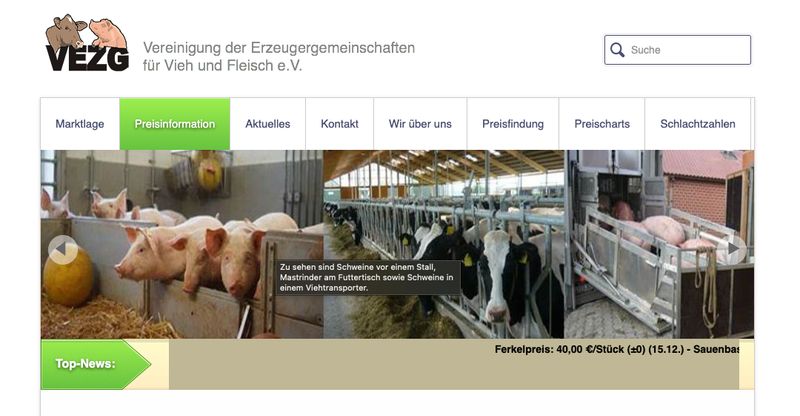
The Vereinigung der Erzeugergemeinschaften für Vieh und Fleisch e.V. (VEZG) is the umbrella organisation that represents the interests of German livestock producer groups. While technically a voluntary association, its weekly price recommendation functions as the de facto benchmark for the German market and heavily influences pricing across the entire EU.
When the VEZG sets the price (currently holding firm at €1.60/kg), it is sending a signal about the balance of power between farmers and the powerful slaughter conglomerates.
The Power Brokers: Who Sits at the Table?
The VEZG is led by a board of directors (Vorstand) composed of representatives from various regional producer groups (Erzeugergemeinschaften or "EZGs"). These individuals effectively bundle the negotiation power of thousands of independent farmers.
Based on current organisational data, here is the breakdown of the leadership team driving the association's strategy.
1. Executive Leadership (Geschäftsführender Vorstand)
This core trio directs the association's strategy and manages the high-stakes interface with the slaughter industry.
Matthias Frieß (1st Chairman / 1. Vorsitzender)
Representing: UEG für Qualitätsschlachttiere Hohenlohe-Franken w.V. (Creglingen)
Role: As the primary figurehead, Frieß leads the charge in unifying producer interests from the south (Baden-Württemberg), a region known for high-quality production.
Bernd Schiefer (2nd Chairman / 2. Vorsitzender)
Representing: Schweinevermarktung Rheinland w.V. (Sonsbeck)
Role: Representing the Rhineland, Schiefer brings the weight of one of Germany's most intensive agricultural regions to the leadership table.
Jens Suren-Schmits
Representing: Erzeugergemeinschaft für Qualitätsvieh Hümmling e.G. (Lorup)
Role: Often operating alongside the chairmen, Suren-Schmits represents the northwest (Lower Saxony), the absolute heartland of German pig fattening.
2. The Board Members (Vorstandsmitglieder / Beirat)
Ensuring that every major agricultural region has a voice, the extended board includes veterans from across the country.
Gerd Thieße: Representing the Elbe-Weser region (Bauernsiegel EZG).
Dietmar Woltmann: Representing Grafschaft Bentheim, a key hub for piglet production.
Henning Kock: Representing Bösel, focusing on the slaughter cattle sector.
Heinrich Lohmann: Representing the Lüdinghausen-Selm livestock marketing cooperative.
Erwin Hochecker: The voice of Southern Bavaria (EZG Südbayern).
Udo Engemann: Representing the Hochstift Paderborn region.
What Does This Board Actually Do?
While they manage the association's administration, their most critical operational task is the weekly Notierung (price setting).
The Mechanism of Price Discovery
The board doesn't just guess a number. They oversee a complex information gathering process involving:
Supply Data: How many pigs are registered for slaughter in the coming week?
Demand Signals: What are the slaughterhouses (Tönnies, Westfleisch, Vion) signalling about their capacity needs?
Market Sentiment: How is the meat moving at retail? Are cold stores full?
The "Bundle" Strategy: By acting as a collective, the VEZG prevents slaughterhouses from picking off individual farmers with lowball offers. When Matthias Frieß and his team announce a price of €1.60, they are essentially drawing a line in the sand on behalf of the producers: "This is the fair value of a pig this week."
Current Market Context
The board's current strategy—holding the price at €1.60 despite price crashes in the Netherlands (€1.30) and Spain (€1.04)—demonstrates their resolve. They are betting that German domestic demand for Christmas is strong enough to resist the pan-European downward trend, protecting their members' margins for as long as possible.
Conclusion
The VEZG is more than just a club; it is the pricing engine of the German meat industry. The men sitting on this board bear the responsibility of ensuring that farmers receive a transparent price in a market dominated by massive industrial processors. When they speak on Wednesdays, the industry listens.
Sources:
Board Context: Analysis based on regional representation and association roles.