Published in Industry Insights
In Finland, Being ASF-Free Is Not Enough to Export
Finland's new African swine fever buffer zone is officially free of the disease, yet live pigs inside it still cannot leave the country, and we think that gap is the real lesson for European pork buyers.

Martina Osmak
Director of Marketing
MeatBorsa's take
This first section is our reading of the Finnish situation, not reported fact. The confirmed record from the Finnish Food Authority follows further down.
Finland is a small pork producer, so nobody should expect this to move a European price. What we think matters is the speed, and what the speed exposes. Finland had never recorded African swine fever until the end of July 2026. Six weeks later the authorities had drawn a second ring around the problem, and inside that second ring live pigs can no longer leave the country, even though the authorities describe the area as free of the disease.
That is the part worth taking seriously. The commercial damage from ASF now arrives before the infection does. It arrives as a line on a map. A farm with healthy animals, no cases and no contact with wild boar can lose an export route because of where it sits, not because of anything found in its barns.
Our view is that European buyers should stop treating zone status as background information and start treating it as a contract variable. In practice that means three things. Check the zone status of the supplying establishment on the loading date, not the date you signed. Put a clause in the contract that says what happens if a zone is redrawn between agreement and dispatch. And ask the question of suppliers in northern and western Europe too, not only in the east, because Finland was a clean country ten weeks ago.
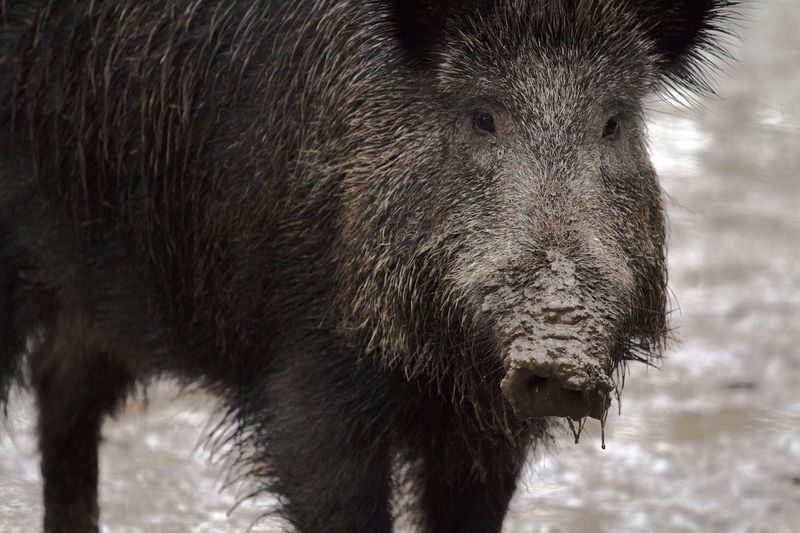
We also think the wild boar detail deserves more attention than it usually gets. Every case so far has been in wild boar, not in kept pigs. A country can therefore look perfectly healthy on the farm side and still be losing trade access week by week.
What we assume, and why we could be wrong
We assume the virus stays in the wild boar population and does not reach a Finnish commercial pig unit. If it does reach one, this stops being an administrative cost and becomes a certification and supply problem, and the tone of the story changes completely.
We assume buyers inside the European Union keep handling Finnish product normally, because the EU system works by zones rather than by countries. Buyers outside the EU often do not work that way, and if they respond at national level the cost lands harder and faster than the zone map suggests.
We could also be too pessimistic. The buffer zone was an early and aggressive move, the case count is still modest, and no farm has been hit. A containment that works would make this a short story rather than a long one.
What the record actually says
Finland confirmed its first African swine fever case on 30 July 2026, when the virus genome was detected in wild boar found dead in Virolahti, in the south-east of the country. The result was verified by the EU reference laboratory for ASF, according to the Finnish Food Authority.
As of the authority's page updated on 20 September 2026, 38 cases have been recorded. Most are in Virolahti, but the spread is visible: case 35 was found in Pyhtää on 28 August, well to the west of the original cluster, and the most recent listed case was confirmed in Miehikkälä on 15 September.
The control map has been redrawn four times in six weeks. An infected zone was set up on 30 July, refined on 31 July with a stricter core area inside it, extended on 28 August, and on 10 September the authority added an additional restricted zone, a buffer, around the whole thing. The buffer covers the municipalities of Lappeenranta, Luumäki, Kouvola, Loviisa and Lapinjärvi.
The rules inside that buffer are the interesting part for anyone trading pigs or pigmeat:
The area is considered free from ASF and exists to separate the infected zone from the rest of Finland.
Live pigs may not be moved from the buffer zone to destinations outside Finland. Movements within Finland are not restricted.
Wild boar carcasses, fresh wild boar meat, wild boar meat products and other derived products may not be moved inside or outside the zone, although meat that tests negative may be used for the hunter's own household.
Hunting of wild boar is permitted and encouraged, and every animal shot must be sampled and sent to the authority's laboratory.
Pig units in the zone must prevent direct and indirect contact between domestic pigs and wild boar, with requirements covering protective clothing, footwear, handwashing and disinfection.
The same decision loosened some hunting rules in the infected zone, allowing trapping of small predators, hunting of cormorants and seals, protective hunting of barnacle geese, and ambush hunting of moose in fields, while keeping tight controls on dogs working off leash.
What we are watching next
Whether any case turns up in a kept pig rather than a wild boar. That is the line that separates a zoning problem from a trade problem.
Whether the infected zone moves further west after the Pyhtää case, which would put more of southern Finland inside a restricted area.
How quickly the next Finnish Food Authority decision comes, because the interval between decisions is the best available signal of how confident the authorities are.