Published in Industry Insights
Europe's ASF Count Is Down 17%, but the Fall Is in the Forest, Not on the Farm
African swine fever outbreaks in Europe fell 16.6% in the first nine months of 2026, but domestic pig outbreaks stayed flat and Spain's trade restrictions remain in force, and our view is that the headline count understates what buyers and sellers of pork still face.

Martina Osmak
Director of Marketing
MeatBorsa's take
This section is our reading of the numbers, not reported fact. The confirmed figures follow below it.
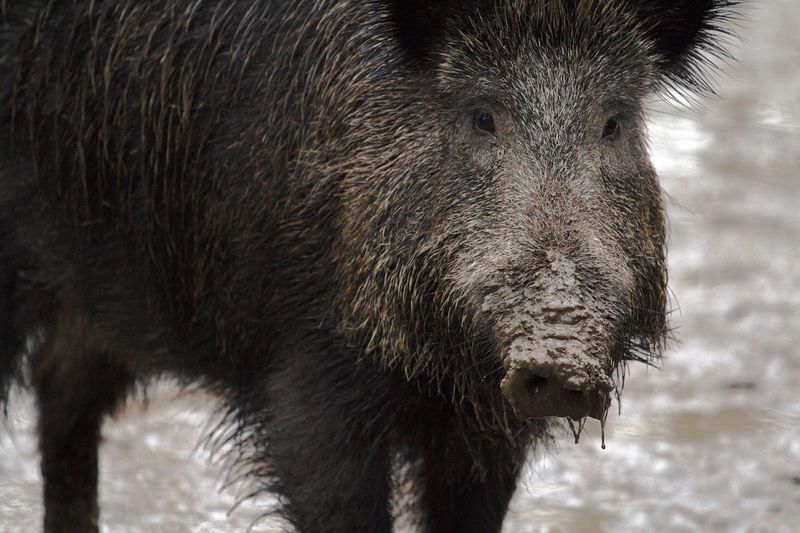
The headline says African swine fever (ASF) is easing in Europe. Total outbreaks are down about 17% on last year, and that sounds like good news for the pork trade. We think the headline is misleading, because the fall is almost entirely in wild boar. On farms, the number of outbreaks has not moved at all.
That matters because the two kinds of outbreak do different damage. Wild boar cases mostly hit trade through restrictions on whole regions or countries. Farm outbreaks remove actual pigs from the supply chain and close the farms around them. A buyer or seller should watch the second number more closely than the first.
The second point is that the money is being lost at the border, not in the barn. Spain found ASF in wild boar in November 2025, and the market access problems that followed are still there almost a year later. Our reading is that Spanish pork has been pushed back into Europe, and that is one reason pig prices on the continent stay under pressure. For a seller of Spanish or neighbouring-country pork, we expect competition inside the EU to stay hard on the cuts that used to go to Asia.
The third point is the Balkans. Croatia's domestic pig outbreaks roughly tripled and Serbia's rose, while Romania's fell. We think that anyone sourcing pork or live pigs from the region should check farm-level health status and regional supply with their partner before agreeing volumes, not after.
What we assume, and why we could be wrong
- Spanish pork keeps flowing mostly inside the EU. We assume markets that already restrict Spanish pork stay restricted, because those rules are in force today. If Spanish exporters win more business in markets that accept regionalised pork, the pressure on the EU market would ease faster than we expect.
- Farm outbreaks matter more than boar counts for supply. We assume that flat farm numbers mean no real improvement for producers. This could be wrong if the Balkan jump turns out to be a short summer peak that fades in the colder months.
- Weak Chinese demand stays a drag. We assume China keeps buying less pork than last year, as it has through August. If Chinese buying recovers, the loss of Asian outlets would hurt European sellers less.
What the numbers actually say
The main outbreak data comes from the EU's animal disease reporting system, ADIS, as summarised by pig333 on 9 October. It covers 1 January to 30 September 2026, compared with the same period of 2025.
- Total ASF outbreaks fell from 8,937 to 7,455, a drop of 16.6%.
- Wild boar outbreaks fell from 8,205 to 6,722, down 18.1%.
- Domestic pig outbreaks were 733, against 732 a year earlier. pig333 calls that practically stable.
- Domestic pig outbreaks by country: Romania 315 (364 last year), Serbia 217 (178), Croatia 130 (43).
- Wild boar outbreaks fell sharply in Poland (2,720 to 1,721) and Germany (1,840 to 718), but rose in Italy (539 to 1,096) and Lithuania (556 to 859).
The trade picture comes from the US Department of Agriculture's Foreign Agricultural Service, in its report of 9 October. It says Spain reported its first wild boar ASF cases since 1994 in November 2025. Japan, Malaysia and Taiwan still restrict Spanish pork. China and South Korea accept pork from unaffected regions, and the Philippines formally recognised regionalisation in May 2026.
USDA also reports that Spain moved more product to other EU member states and expanded exports to South Korea, Vietnam and the United States. EU pork export unit values fell about 8.7% in the year to July, to $2,867 per tonne carcass weight from $3,141. Its forecast puts EU pork exports at 3.05 million tonnes in 2026 and 2.95 million in 2027. China's pork imports were down nearly 30% through August.
A third view comes from the Netherlands. pig333 reported on 14 October that ABN AMRO expects the liquidity of Dutch pig farms to worsen over the next six months, with piglet producers under the most pressure. The bank named three drivers: Chinese tariffs on pork cuts, restrictions on Spanish pork exports outside the EU because of ASF, and a strong euro. It does not expect a significant price recovery.
What we are watching next
We are watching three things in the coming weeks: whether Croatian and Serbian farm outbreaks keep climbing as the weather cools, whether Spanish pork finds more outlets outside the EU, and whether the Dutch and German pig price gap to Spain narrows. Each one tells us whether the pressure on European pork is easing or just moving to a different place.
Sources
ASF in Europe: Fewer outbreaks in wild boars, but no decline in domestic pigs - pig333
ASF and weak China demand to reshape 2027 pork trade - pig333
The Netherlands: Economic outlook for the pig sector worsens - pig333
Livestock and Poultry: World Markets and Trade, October 2026 - USDA Foreign Agricultural Service