Published in News
EU Could Stop Brazilian Meat Imports Over Antibiotic Concerns
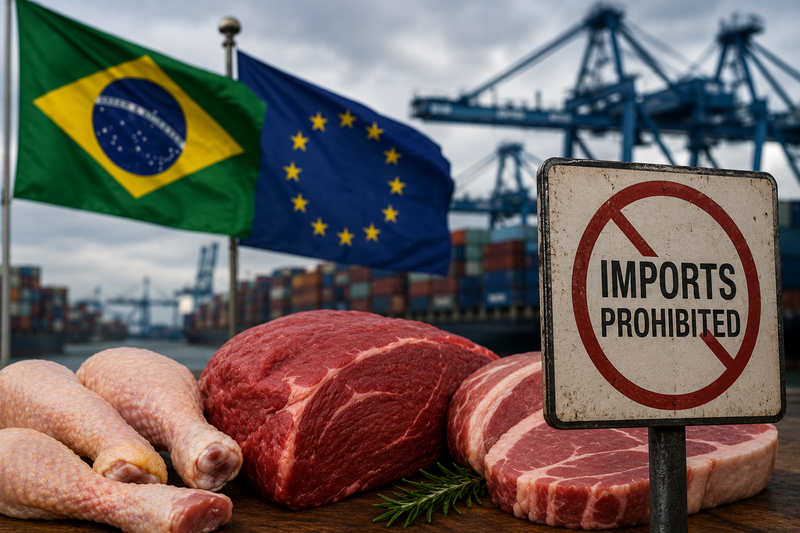
Brazil may lose access to the EU meat market in September unless it proves its farming practices meet strict European rules on antibiotic use in animals.

Martina Osmak
Director of Marketing
Brazil Left Off EU Compliance List
The European Commission has confirmed that Brazil is no longer included on the EU’s updated list of countries allowed to export certain animal products to the bloc.
Without approval, Brazil could lose access to the EU market from 3 September 2026.
The restriction would affect products such as:
Beef
Poultry
Eggs
Honey
Aquaculture products
Animal casings
Live food-producing animals
EU officials say the decision is linked to antimicrobial resistance, often called AMR, which health experts consider a growing global threat.
Why the EU Is Taking Action
Under EU law, antibiotics and other antimicrobials cannot be used to promote faster animal growth or higher production in farming.
European authorities say all exporters must meet the same standards as farmers inside the EU.
According to the Commission, Brazil did not provide enough guarantees that banned antimicrobials are avoided throughout the entire life of animals used for export products.
The EU introduced these rules for its own producers in 2022 and later expanded them to imported goods.
Trade Deal Creates Political Tension
The decision comes only days after the EU and Mercosur trade agreement provisionally entered into force on 1 May.
The deal includes Argentina, Brazil, Paraguay, and Uruguay and reduces tariffs on products such as beef and poultry.
Many European farmers strongly opposed the agreement before it started. They argued that imports from South America could create unfair competition if production rules differ between regions.
Brazil is now the only Mercosur member not included on the EU compliance list.
Brazilian Officials Say Decision Was Unexpected
Brazilian representatives in Brussels said the move came as a surprise.
Officials from Brazil’s mission to the EU said they had repeatedly tried to contact the European Commission’s health department in recent months.
Industry groups in Brazil also reacted quickly.
The Brazilian Beef Exporters Association, known as Abiec, said the country still has time to provide the required guarantees before the September deadline.
Brazilian poultry and animal protein groups defended the country’s inspection systems and said they follow international food safety standards.
Some industry representatives also suggested the timing may be politically sensitive because of pressure from European farming groups after the Mercosur agreement.
Which Antimicrobials Are Involved?
The EU bans several antimicrobial substances used as growth promoters in animals.
These include:
Virginiamycin
Avoparcin
Bacitracin
Tylosin
Spiramycin
Avilamycin
Brazil has already started tightening some rules.
In April, Brazil’s Agriculture Ministry introduced restrictions on certain antimicrobial products, including avoparcin and virginiamycin.
However, legal experts say further changes may still be needed to satisfy EU regulators.
Brazil Faces Two Main Options
Experts say Brazil has two possible paths to restore exports.
Ban More Substances
The first option would be to legally prohibit the remaining antimicrobials that are not accepted by the EU.
This could be the faster solution from a regulatory point of view.
Improve Traceability
The second option would be to prove that exported meat does not contain banned substances, even if they are still allowed in some domestic production systems.
That process would require detailed animal tracking and supply chain monitoring, which can be expensive and difficult to implement quickly.
Impact on Global Meat Trade
The European Union is one of Brazil’s most valuable meat export markets.
China remains the largest buyer, but Europe is still important for high-value beef and poultry products.
If the suspension takes effect in September, exporters may need to redirect products to other regions.
The case also highlights growing pressure on global food exporters to meet stricter environmental and health standards in major markets.
EU Says Imports Can Resume Later
European officials stressed that the measure is not necessarily permanent.
If Brazil proves compliance with EU antimicrobial rules, exports could restart in the future.
The Commission also repeated that trade agreements do not change European food safety laws.
For now, both sides are expected to continue negotiations before the September deadline.
Sources: