Published in News
China Introduces New Tariffs on Australian Beef: What It Means
China has set limits and tariffs on Australian beef to protect its own farmers, which may affect exports but is not a full trade war.

Martina Osmak
Director of Marketing
What is the new rule?
China has announced new controls on beef imports.
China will set a limit (quota) on how much beef can be imported
If exports go over the limit, a 55% tariff will apply
The rule starts on 1 January 2026
It will last for three years
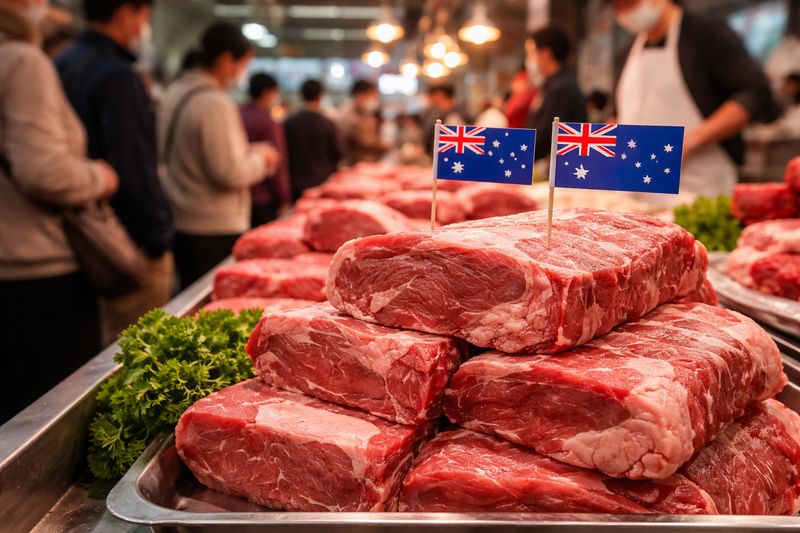
This decision affects beef exported from Australia to China.
China has also paused some parts of the China–Australia Free Trade Agreement for beef.
Why did China introduce the tariff?
The main reason is China’s domestic beef market.
In recent years:
China has produced too much beef
Beef prices inside China have fallen
Beef imports from other countries have increased
Chinese farmers say imported beef is making it harder for them to compete.
Because of this, farming groups asked the Chinese government to act.
China says the tariff is needed to protect local farmers and businesses.
Is this a political decision?
This decision is mostly economic, not political.
Earlier trade problems between China and Australia were linked to political tensions.
This time, the issue is oversupply and falling prices in China.
China recently:
Removed bans on some Australian beef suppliers
Allowed more Australian beef into the market
This shows the relationship is not fully broken, but still uncertain.
How important is China for Australian beef?
China is a major buyer, but not the biggest.
Australia sells mainly high-quality, premium beef
Other countries, like Brazil and Argentina, sell larger volumes
Australia focuses on value, not low-cost beef
Because of this, Australia plays a smaller but higher-end role in China’s beef market.
How big is the impact on Australia?
The impact is not clear yet.
Some key points:
The quota is lower than recent export levels
Exporters may need to change where they sell beef
Prices and profits could be affected if tariffs apply
Experts say the effect will depend on how strict the quota is and how demand changes.
What has Australia learned from past trade disputes?
After earlier trade problems with China, Australian exporters changed their strategy.
They now:
Sell beef to more countries
Rely less on one single market
Move exports more quickly when rules change
This makes the industry more stable than before.
What happens next?
In the short term:
Exporters may adjust shipments
Some uncertainty will continue
In the long term:
Demand for Australian beef remains strong
China may still be an important market
Other global markets offer new opportunities
Experts say changes like this are common in global trade.
Conclusion
China’s new beef tariffs are mainly about protecting Chinese farmers.
They create challenges for Australian exporters, but the situation is not a full trade conflict.
Australia’s beef industry is now better prepared to manage these risks than in the past.
Source: https://www.sbs.com.au/news/article/china-beef-tarriffs-australia-explained/l9c5gzq37