Published in News
China Deepens Its Economic Footprint in Tajikistan
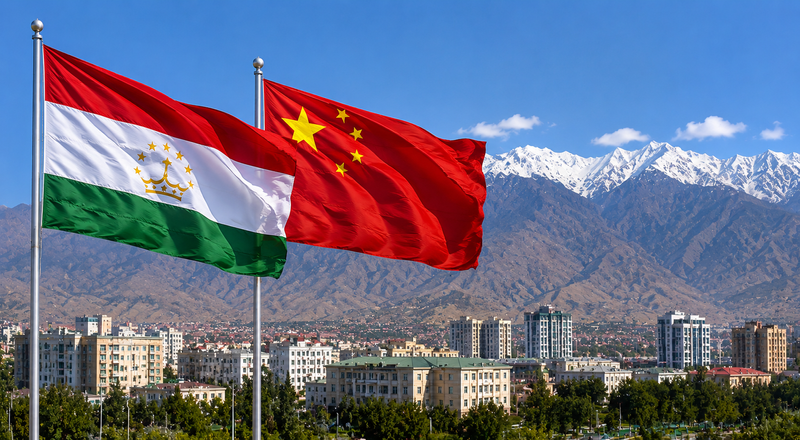
New investment agreements signed during President Emomali Rahmon's visit to Beijing could bring billions of dollars into Tajikistan and strengthen China's role in the country's economy.

Martina Osmak
Director of Marketing
Chinese Investment Continues to Grow
China is becoming an increasingly important economic partner for Tajikistan as both countries look to expand cooperation across multiple industries.
During a recent visit to Beijing, Tajik President Emomali Rahmon met with Chinese leaders and business representatives to discuss new investment opportunities. The talks resulted in more than 50 agreements between companies from the two countries, with planned investments reportedly exceeding $8 billion.
The deals cover a range of sectors, including industry, infrastructure, energy, mining, and agriculture.
From Trade Partner to Major Investor
China's influence in Tajikistan has expanded steadily over the past decade.
Hundreds of companies with Chinese capital are already active in the country, participating in construction projects, manufacturing, resource development, and transport initiatives. China has also become Tajikistan's largest trading partner, reflecting the growing volume of business between the two economies.
For Tajikistan, Chinese investment offers access to funding and development projects that could help modernize key industries and improve economic growth.
Transport Projects Gain Momentum
Improving connections between regional markets remains a major priority.
Tajikistan sits at a strategic crossroads between China, South Asia, and the Middle East. Officials believe new transport corridors can help turn the country into an important transit hub for goods moving across the region.
Recent rail developments have already expanded trade routes linking China with Central Asia, making cargo transportation faster and more efficient.
Agriculture Becomes a New Area of Cooperation
Economic cooperation is no longer limited to infrastructure and industry.
The two countries recently signed an agreement that creates a framework for poultry meat trade. The deal establishes common standards for food safety, veterinary inspections, disease monitoring, certification, transportation, and product labeling. It also defines which poultry products can be traded and how export facilities must be approved.
Officials hope the agreement will make agricultural trade more predictable while reducing the risk of animal disease outbreaks affecting cross-border commerce.
Critical Minerals Attract Attention
Another sector drawing interest is mining.
Tajikistan possesses significant reserves of minerals used in batteries, renewable energy equipment, and other technologies needed for the global energy transition. Chinese companies have shown increasing interest in these resources as demand for critical minerals continues to rise worldwide.
Industry representatives from both countries have recently held discussions on potential cooperation and future investment opportunities in this field.
Questions About Long-Term Dependence
While the growing partnership creates economic opportunities, some observers believe Tajikistan should carefully manage its increasing reliance on China.
Analysts point to rising imports, expanding financial ties, and growing dependence on foreign investment as factors that could create vulnerabilities in the future. Security concerns have also emerged following incidents near the Afghan border involving Chinese interests in the region.
Even so, cooperation between Beijing and Dushanbe continues to move forward, supported by strong political and economic engagement from both sides.
Looking Ahead
The latest agreements suggest that China intends to remain a major player in Tajikistan's development plans. As investment flows increase and new trade channels open, the relationship between the two countries is likely to become even more important for the future of Central Asia's economy.
Source: