Published in Industry Insights
Britain's Bluetongue Count Is Now Six Times Last Season's Total
Britain has confirmed 2,309 bluetongue cases and restricted zones now cover all of England and Wales, and our view is that the pressure falls on live animal trade in the busiest autumn weeks, not on the meat itself.

Martina Osmak
Director of Marketing
MeatBorsa's take
This section is our reading of the numbers, not reported fact. The confirmed figures follow below it.
We think the Great Britain bluetongue outbreak has stopped being a regional animal health story and become a trading-calendar story. Autumn is when store cattle, breeding sheep and finished animals change hands in large numbers. When restricted zones cover all of England and Wales, every one of those movements carries extra rules, extra paperwork or extra cost.
For a buyer of British lamb or beef, our view is that the first effect is on timing and handling, not on the product. Sellers who normally plan a steady weekly kill may find animals arriving in lumps, or later than planned. If you buy on a fixed delivery schedule, we would ask suppliers now how their autumn supply is planned, and we would not assume a price signal is coming before a volume signal.
We also think the scale matters more than any single week's count. A season that is already several times larger than the whole of last year's will push more farms to vaccinate and more buyers of live animals to ask for proof of it. That adds cost at farm level, and it can show up later in what producers ask for animals.
What we assume, and why we could be wrong
- We assume chilled and frozen meat keeps flowing normally and the friction sits in live animal trade. The sources below describe animal movement rules, not meat rules. If a buyer or market turns out to treat British product differently, this view is wrong.
- We assume case numbers keep rising while the weather stays warm. The official page says temperatures are still high enough for the virus to develop inside midges. If a cold spell arrives early, the count could flatten sooner than we expect.
- We assume the headline count overstates the supply effect. Cases are counted by premises, not by animals lost, and more than 1,000 further cases are still being investigated. If many of those cases are mild, the effect on supply will be small. If they are not, it could be larger than we think.
- We assume vaccination uptake rises through the autumn. Farmers who wait could face a busier and more expensive winter than those who act now.
What the numbers actually say
All figures below are from the sources listed at the end, and the sources were updated on slightly different days, so their totals differ by a few hundred.
- GOV.UK, updated 30 September: 2,309 confirmed cases of bluetongue serotype 3 or unspecified serotype across the United Kingdom. England has 1,901, Wales 368, Scotland 40 and Northern Ireland none.
- On 29 September alone, 76 new cases were confirmed in England, 30 in Wales and 1 in Scotland, and 1,010 potential cases were still under investigation.
- FarmingUK, citing government figures from 28 September, reported 2,124 confirmed premises. That is more than double the 1,015 recorded on 9 September, and six times the 348 premises recorded in the whole 2025-26 season.
- Devon leads with 872 cases, then Cornwall with 250 and Somerset with 156, according to the same report.
- Sheep, cattle, goats, alpacas and llamas have all been affected.
On the rules, GOV.UK says restricted zones are in place across all of England and Wales, plus parts of Scotland, with movement restrictions and licensing requirements. The Orkney News reports that a restricted zone covering south-west Scotland was set up on 10 September, and that 35 of Scotland's cases are in Dumfries and Galloway.
GOV.UK rates the risk of the virus entering the country as medium through all routes, and the risk of spread by airborne infected midges as low.
What we are watching next
Three things will tell us whether this view holds. First, the number of potential cases under investigation, because it shows how much of the count is still to come. Second, how the weekly new-case figure moves once nights turn colder. Third, any change in how live animal sales are run in the busiest autumn weeks.
We will come back to this if the numbers or the market change the picture.
Sources
Bluetongue: latest situation - GOV.UK
Bluetongue outbreak surges past 2,100 premises - FarmingUK
Bluetongue Latest - The Orkney News
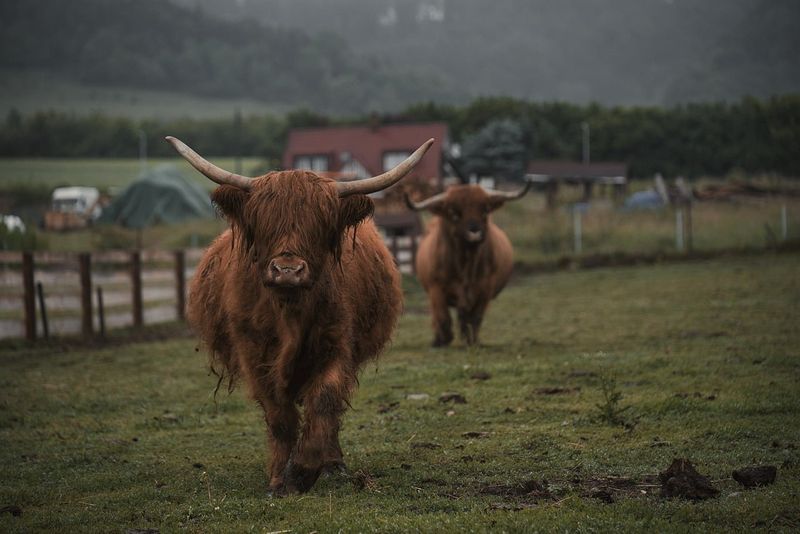
Cover photo: Photo by SportKlatka on Pixabay.