Published in Industry Insights
Bird Flu Has Reached a Commercial Duck Farm in Lincolnshire, and the Exposure Is Local, Not National
Four UK bird flu cases in five weeks, and the latest on 4 November is reported to be a commercial duck farm in Lincolnshire, and our view is that the exposure for poultry meat buyers is local movement rules and timing, not national supply.

Martina Osmak
Director of Marketing
MeatBorsa's take
This section is our reading of the news, not reported fact. The confirmed figures follow below it.
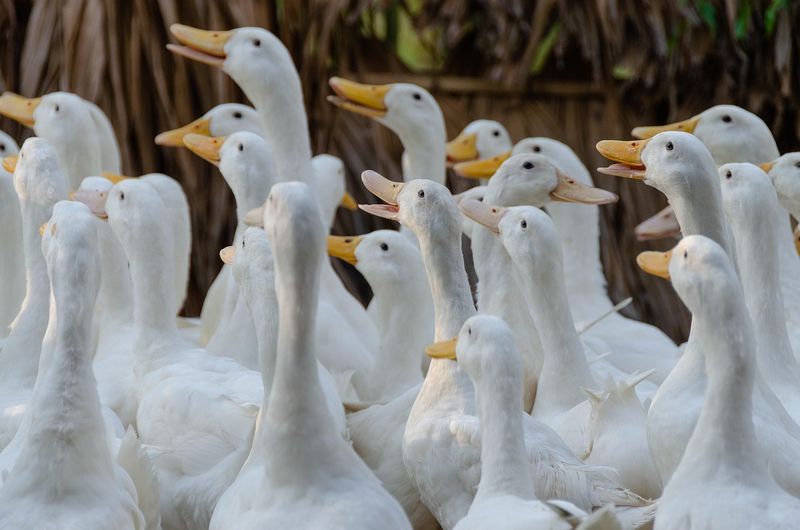
Until now, the British bird flu cases this season were laying flocks or a backyard flock. The case confirmed near Brigg in Lincolnshire on 4 November is the first one in this run that FarmingUK reports as a commercial duck farm, a meat bird. We think that changes the question for meat buyers from "is bird flu back?" to "which premises are inside a zone, and what does that do to the timing of my lots?"
Our view is that the exposure is local. A cull of one farm, plus 3km and 10km zones around it, stops or slows movements of birds, eggs and poultry meat in that area. It does not, on the facts available today, remove meaningful volume from the national market. What buyers and sellers can feel is delay, licences and paperwork on product that comes from the Lincolnshire area.
We also think the pace is worth noting. Four confirmed cases in the UK in five weeks, with the season only a month old, is an early start. The numbers from earlier seasons show how wide the range can be, from 6 cases in 2023 to 2024 to 100 in 2025 to 2026.
What we assume, and why we could be wrong
- We assume the Brigg case stays a single-farm event with no quick follow-on cases among nearby commercial meat flocks. If several meat flocks in one area are hit in a short time, processors would lose supply on a schedule and our "local only" reading would be too relaxed.
- We assume one duck farm is a small share of what the UK poultry meat trade handles. The flock size we cite is an industry figure, not an official one, and we have not seen a source that sets duck meat against total UK output, so this is an assumption and not a measured fact.
- We assume zone rules are applied as published, with licences available for movements. If licensing runs slower than expected in practice, delays could be longer than we describe.
- We assume the pattern of four cases in five weeks does not mean a heavy winter by itself. Earlier seasons show that the count can climb quickly, and one month of data is a short base.
What happened
The UK government's bird flu page (Defra and APHA) was updated on 4 November 2026. It lists highly pathogenic avian influenza H5N1 confirmed in commercial poultry near Brigg, North Lincolnshire, on 4 November. A 3km protection zone and a 10km surveillance zone were declared, and all poultry on the premises will be humanely culled.
The official notice does not say which birds are kept there. FarmingUK reported on 5 November that it is a commercial duck farm. It also wrote that industry outbreak records indicate around 64,000 ducks are affected, but it noted that the official notification does not give a bird number. Agriland UK, also on 5 November, described the premises only as commercial poultry.
This is the latest of four confirmed UK cases this season:
- 2 October: H5N5 in a backyard flock near Ness, Isle of Lewis, Scotland.
- 19 October: H5N1 in a commercial free-range laying flock near Belford, Northumberland.
- 2 November: H5N1 in a commercial free-range laying flock near Biggar, Scottish Borders, according to Poultry News.
- 4 November: H5N1 near Brigg, North Lincolnshire.
What the numbers and rules say
- The UK government's table lists 3 H5N1 cases (two in England, one in Scotland) and 1 H5N5 case (Scotland) so far in the 2026 to 2027 season.
- Earlier seasons, as published by the same page: 100 highly pathogenic cases in 2025 to 2026, 82 in 2024 to 2025, 6 in 2023 to 2024, 207 in 2022 to 2023.
- Under World Organisation for Animal Health rules, the UK is no longer free from highly pathogenic avian influenza.
- In protection zones, poultry and other captive birds must be housed, and movements on and off premises need a licence, according to FarmingUK. Movement of eggs, poultry meat and other poultry production materials is also restricted, and licences are needed for certain movements in the 10km surveillance zone.
- The government risk assessment, updated on 21 October, puts risk to poultry as low where biosecurity is suboptimal or poor, and very low where strict biosecurity is applied consistently. The risk in wild birds is medium.
- Poultry cannot be vaccinated against bird flu in England, according to the government page.
- The Food Standards Agency says properly cooked poultry products, including eggs, are safe to eat. UKHSA rates the risk to the public as very low.
UK Chief Veterinary Officer Christine Middlemiss said, as quoted by FarmingUK: "Good biosecurity is our best defence against the disease entering kept bird populations."
What we are watching next
- Whether further cases appear near Brigg or in other commercial meat flocks, rather than laying flocks, in the coming weeks.
- How the government page's season table moves, since it is updated with each confirmed case.
- How long the Lincolnshire protection and surveillance zones stay in place, because that sets how long movement licences apply.
- Whether the official notification gives a species and bird number for Brigg, so the industry figure can be checked.
A question worth putting to your own suppliers: which premises supply your lots, and are any of them inside a current protection or surveillance zone?
Sources
Bird flu (avian influenza): latest situation in England - GOV.UK (Defra and APHA)
Bird flu outbreak strikes Lincolnshire duck farm, triggering poultry cull - FarmingUK
Bird flu case in Lincolnshire sparks another protection zone - Agriland UK
Bird flu confirmed in commercial laying flock in Scottish Borders - Poultry News