Published in News
ASF Returns to Saxony After More Than a Year Without New Cases
A new African swine fever case in a wild boar has ended Saxony’s short period of relief and raised fresh concerns about the virus in Germany.

Martina Osmak
Director of Marketing
New case confirmed in eastern Germany
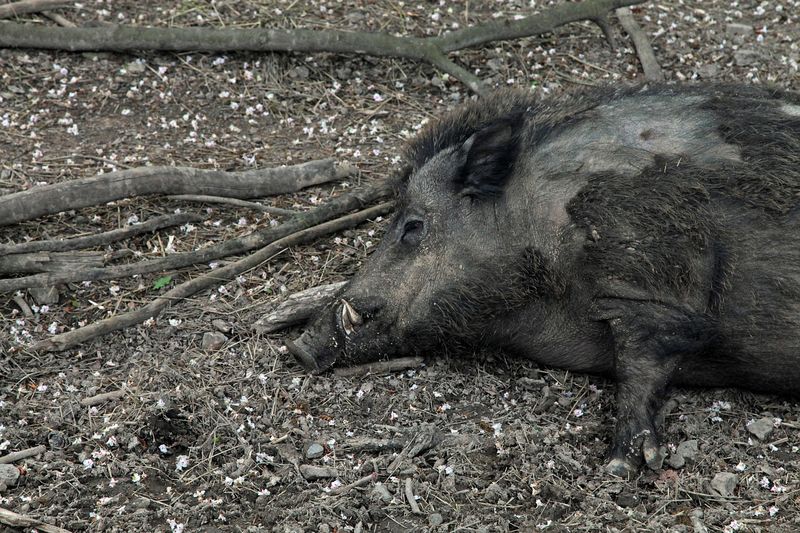
African swine fever, or ASF, has been detected again in the German state of Saxony. The new case was confirmed in a young wild boar found in the Görlitz district, west of the city of Görlitz.
Laboratory results from Germany’s national reference centre, the Friedrich Loeffler Institute, confirmed the infection after the animal was found on March 31, 2026.
The discovery is important because Saxony had only recently been declared free of ASF in wild boar. The state had gone more than a year without a new confirmed case.
Restrictions had just been lifted
The new detection came less than two months after Saxony removed its last ASF restriction zones.
That earlier decision followed a long and expensive control campaign. For more than five years, the state worked to contain the disease through fencing, wild boar monitoring, carcass searches, and close cooperation between veterinary teams, hunters, and farmers.
Now, authorities must respond again.
Immediate response from authorities
Local officials quickly started disease control measures at the site where the infected animal was found.
These steps include:
renewed searches for dead wild boar in the area
use of trained dog teams and drones
tighter monitoring around the detection site
a halt to fence removal in the nearby zone
Saxony’s social affairs minister, Petra Köpping, described the case as a serious test, but said the region has strong experience in managing outbreaks.
Why this matters
The new case is a reminder that ASF can return even after a long quiet period.
Experts have warned that the virus can continue circulating in wild boar populations, especially near border regions. That means areas that appear stable can still face fresh outbreaks.
Saxony had been seen as a success story. Since ASF first appeared there in October 2020, the state recorded thousands of cases in wild boar but avoided infections in domestic pig farms. By early February 2026, officials believed the outbreak had been brought under control.
This new finding shows how fragile that progress can be.
Wider picture in Germany
The case in Saxony is not happening in isolation.
Germany has spent years fighting ASF in several regions. While some eastern areas have improved, other parts of the country are still dealing with active cases, especially in wild boar.
In recent years, the disease has affected multiple federal states. Some regions managed to reduce case numbers and lift restrictions, while others continued to report new infections and expand control zones.
That broader pattern matters for a global audience because it shows one clear lesson: ASF is difficult to eliminate completely once it becomes established in wildlife.
Risk remains for pig farming
ASF does not infect humans, but it is deadly for pigs and wild boar. It can also cause major economic damage through trade restrictions, farm losses, and long control campaigns.
For farmers, the return of the virus in Saxony is another warning that biosecurity cannot relax too soon.
Basic prevention remains essential, including:
strict farm hygiene
careful control of transport and visitors
fast reporting of sick or dead animals
strong separation between domestic pigs and wild boar
A warning beyond Germany
The developments in Saxony are also relevant outside Germany.
Countries with wild boar populations, active pig sectors, or cross-border animal movement face the same risk. Even after long periods without new cases, the virus can reappear.
That is why surveillance, fast response, and clear communication remain central to ASF control.
Outlook
Saxony’s renewed ASF case does not erase the progress made over the past five and a half years. But it does show that the fight is not over.
For now, officials are moving quickly to contain the risk. The coming weeks will show whether this is a single isolated case or the start of a new local spread.
Sources: