Published in News
Antibiotics on Farms: Why the World Should Worry
The growing use of antibiotics in livestock farming in countries like the United States shows how food production can contribute to dangerous drug-resistant bacteria worldwide.

Martina Osmak
Director of Marketing
A Life-Saving Medicine That Is Losing Power
Antibiotics are one of the greatest achievements in modern medicine. They help doctors treat bacterial infections such as pneumonia, strep throat, or urinary infections. Before antibiotics became widely available in the 20th century, many common infections could easily kill people.
These medicines have helped increase human life expectancy by more than 20 years.
However, their effectiveness is now under threat. The reason is antibiotic resistance.
When antibiotics are used too often, bacteria can adapt and become resistant. This means medicines stop working, infections become harder to treat, and doctors have fewer treatment options.
Today the problem is already serious:
In the United States, antibiotic-resistant infections cause about 2.8 million illnesses and around 35,000 deaths each year.
Globally, experts estimate resistant infections could cause up to 10 million deaths annually by 2050 if the trend continues.
The Surprising Place Where Many Antibiotics Are Used
Many people assume antibiotics are mainly used in hospitals. But a large portion is actually used in livestock farming.
In countries with large meat industries, such as the United States, most medically important antibiotics are given to animals rather than humans.
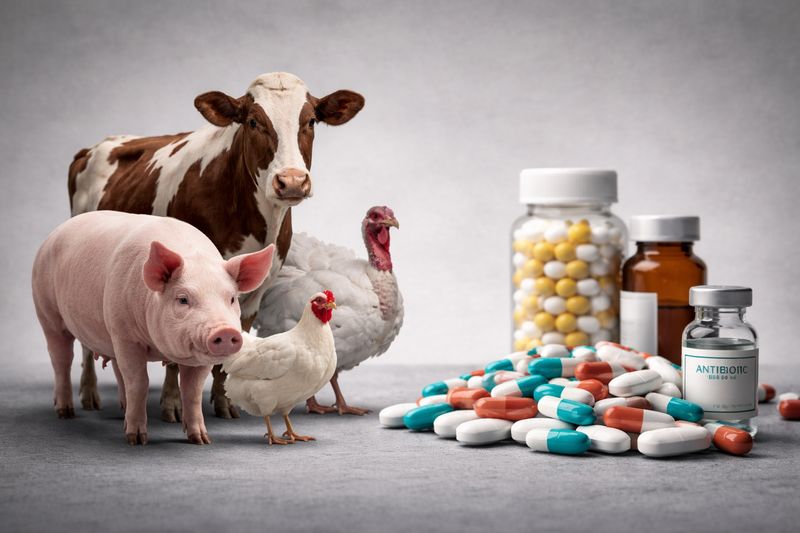
Farm animals that commonly receive antibiotics include:
Pigs (swine)
Cattle
Chickens
Turkeys
Antibiotics may be used to treat sick animals, but they are also frequently given to prevent disease before animals even get sick.
This happens because many animals are raised in large, crowded facilities often called factory farms. When thousands of animals live close together, infections can spread quickly. Antibiotics are often used to manage this risk.
Antibiotic Use Is Rising Again in the United States
Recent government data from the U.S. Food and Drug Administration (FDA) shows a worrying trend.
In 2024, sales of medically important antibiotics for food-producing animals increased sharply.
Key figures include:
Sales rose 15.8% between 2023 and 2024.
Around 7.1 million kilograms of antibiotics were sold for use in livestock.
Since 2017, sales have increased by about 28% overall.
The biggest users were:
Pigs – about 43% of antibiotic sales
Cattle – about 41%
Chickens – a much smaller share, though usage rose sharply in 2024
This increase cannot be explained by more meat production. In the United States, total meat production grew less than 1% in 2024.
Because of this, many scientists believe antibiotics may increasingly be used to prevent disease in healthy animals, rather than simply treat sick ones.
How Farm Antibiotics Can Affect Human Health
The problem with heavy antibiotic use is that it encourages bacteria to evolve.
When bacteria are repeatedly exposed to antibiotics, some survive and become resistant. These resistant bacteria can then multiply and spread.
These bacteria are often called “superbugs.”
They can reach humans in several ways:
Through handling or preparing contaminated meat
Through farm workers who interact with animals
Through water, soil, or waste from farms entering the environment
When people become infected with these bacteria, normal antibiotics may no longer work.
This makes infections harder to treat and increases the risk of severe illness or death.
The Farming System Behind the Problem
Experts say the issue is not only about antibiotics themselves but also about how animals are raised.
In large industrial farms:
Thousands of animals may live in confined spaces
Ventilation may be limited
Waste can accumulate quickly
Disease spreads easily
Under these conditions, antibiotics become a tool to keep animals healthy enough to grow and reach the market.
Some public health experts argue that improving farm conditions could reduce the need for antibiotics significantly.
Europe Shows Another Path
Some regions have shown that it is possible to reduce antibiotic use while still producing large amounts of food.
For example:
Denmark, one of Europe’s biggest pork producers, reduced antibiotic use by improving farm conditions such as ventilation and animal space.
The United Kingdom poultry industry has reduced antibiotic use by over 80% since 2012.
The UK poultry sector also almost eliminated the use of critically important antibiotics that are essential for treating serious infections in humans.
These reductions were achieved through:
Better hygiene in barns
Vaccination programs
More veterinary oversight
Cooperation across the supply chain
Why This Matters Worldwide
Antibiotic resistance does not stay within national borders.
Bacteria can travel through:
International food trade
Global travel
Water systems and environmental spread
This means antibiotic practices in one country can affect health in many others.
Public health organizations around the world now consider antimicrobial resistance one of the biggest global health threats.
What Could Help Solve the Problem
Experts suggest several ways to reduce the risk while still maintaining food production.
Possible solutions include:
Better farming practices
More space for animals
Improved ventilation and hygiene
Reduced overcrowding
Responsible antibiotic use
Only treating animals that are actually sick
Strong veterinary supervision
Clear limits on preventive antibiotic use
Better monitoring
More detailed tracking of antibiotic use on farms
Stronger government regulations
The Bottom Line
Antibiotics have transformed medicine and saved countless lives. But heavy use in livestock farming—especially in major meat-producing countries like the United States—may weaken these life-saving drugs.
Reducing unnecessary antibiotic use in agriculture is not just about farming practices. It is about protecting medicines that humanity depends on.
If the world fails to act, infections that are easy to treat today could become far more dangerous in the future.
Sources: