Published in News
Market Pulse: Agrofert Consolidates Power in Romania with 'Protena' Rebrand
Today's meat industry news: Agrofert consolidates with 'Protena' rebrand, Philippines enacts Spanish pork ban due to ASF, and US announces $12bn farmer support package.

Bo Pedersen
Chief Revenue Officer
Eastern Europe: Romania's Feed Giant Rebrands to 'Protena' in Agrofert Power Play
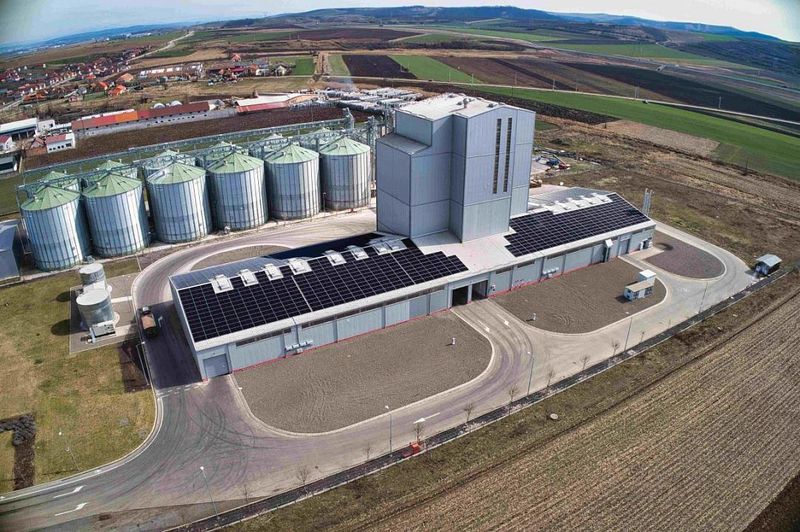
In a significant consolidation of the Black Sea feed market, UBM Feed Romania has officially rebranded as Protena following a major shareholder restructure. The Czech agri-food giant Agrofert (via its subsidiary East Grain) and Poultry Investment SA have acquired the 45% stake previously held by UBM Group, becoming equal 50/50 shareholders.
Market Context
Capacity Powerhouse: The Sânpaul facility in Mureș county is one of the region's largest, with an annual capacity of 200,000 tonnes.
Strategic Alignment: This move integrates the feed plant more tightly with Agrofert’s vast Central European grain network and Poultry Investment SA’s downstream livestock operations.
Financial Outlook: Protena forecasts revenues of RON 332 million (€66m) for 2025, positioning it as a dominant player in the Balkan feed-to-meat supply chain.
Implications
Vertical Integration: The 50/50 split between a grain trader (East Grain) and a livestock investor (Poultry Investment) creates a highly resilient vertically integrated model, likely to squeeze margins for independent feed millers in Romania.
Regional Competition: Protena is now better capitalized to export feed or support contract farming across the border in Bulgaria and Moldova, potentially altering feed procurement dynamics in the wider Danube region.
Suggested Actions
Competitor Review: Independent feed producers in Romania and Bulgaria should review their raw material procurement strategies, as East Grain's increased captive demand may tighten local grain availability.
Supplier Opportunities: Equipment and additive suppliers should re-engage with the new Protena management, as the rebranding typically signals readiness for new CAPEX projects (forecasted gross profit of RON 18m).
Global Trade: Philippines Bans Spanish Pork, Widening ASF Fallout
The economic containment of Spain’s African Swine Fever (ASF) outbreak has suffered another major blow. The Philippines Department of Agriculture (DA) has issued an immediate temporary ban on the importation of all domestic and wild pigs, pork meat, and semen from Spain.
Key Details
Strict Cut-off: Only products produced before November 11, 2025, and shipped before December 4, 2025, will be allowed entry. All other shipments will be seized or returned.
Market Impact: This is a critical loss. Spain is the second-largest supplier of pork to the Philippines, shipping over 117,000 tonnes in the first nine months of 2025 alone.
Inventory Buffer: Philippine Agriculture Secretary Francisco Tiu Laurel Jr. stated that domestic cold storage is full, and the ban is not expected to trigger immediate price spikes during the Christmas holiday season.
Implications
Export Displacement: Combined with bans from Japan and China (Barcelona only), the loss of the Philippine market leaves Spanish exporters with hundreds of thousands of tonnes of "frozen inventory" that must be redirected.
Price Pressure: Expect aggressive discounting of Spanish frozen pork in secondary markets (South America, smaller Asian nations) and within the EU processing sector to clear this displaced volume.
Suggested Actions
Buyers: Processors in the EU and UK should look for spot-market opportunities on Spanish manufacturing meat (trimmings, fats) as exporters scramble to liquidate stocks intended for Asia.
Logistics: Forwarders handling Spain-to-Asia routes should anticipate immediate cancellations and re-routing requests for containers currently on the water.
USA: Trump Administration Unveils $12 Billion "Farmer Bridge" Aid
In a major policy intervention, the Trump administration has announced a $12 billion "Farmer Bridge Assistance" (FBA) program. The one-time payment is designed to support US farmers facing "unfair market disruptions," persistent inflation, and high input costs.
Program Details
Scope: $11 billion is allocated specifically for row crop farmers (soybeans, corn, wheat), with payments calculated based on 2025 crop year losses.
Timeline: Payments are intended as a bridge until higher reference prices (set to increase 10-21% under the "OBBBA" Act) kick in on October 1, 2026.
Rationale: The USDA explicitly cited "market losses from foreign competitors" and the lack of new trade deals as drivers for the liquidity injection.
Implications
Input Cost Support: This injection will likely stabilize US feed crop production, preventing a collapse in planted acreage for the 2026 season despite low global grain prices.
Meat Production Costs: By subsidizing grain farmers, the measure indirectly supports the US livestock sector by ensuring stable feed availability, though it does not directly compensate cattle or hog producers.
Suggested Actions
Feed Buyers: Global buyers of US corn and soy should view this as a signal that US production will remain robust, potentially capping upside risk on global feed prices in Q1/Q2 2026.
Sources
Romania Insider: UBM Feed Romania rebrands as Protena (Verified Dec 8, 2025)
The Star (Philippines): The Philippines bans pork imports from Spain amid ASF outbreak (Verified Dec 9, 2025)
USDA: Trump Administration Announces $12 Billion Farmer Bridge Payments (Verified Dec 8, 2025)