

Published in News
Poland Extends Ukraine Ban, NI Strike Hits Supply, and Confusion Mounts Over EUDR.
Poland defies new EU quotas on Ukraine imports, a strike at a key NI plant threatens supermarket supply, and the EU's landmark deforestation law faces last-minute chaos.

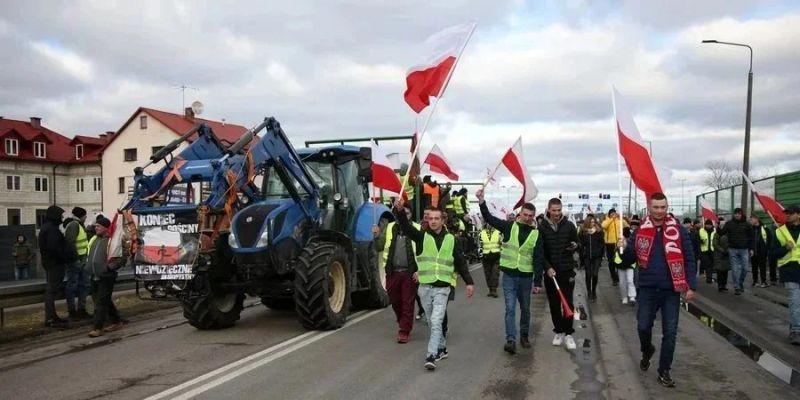
Eastern EU Market: Poland Maintains Ban on Key Ukrainian Agri-Imports
What happened: Poland has announced it will maintain its indefinite ban on key Ukrainian agricultural imports, including wheat, corn, and sunflower seeds, despite new EU trade rules that came into effect on October 29. The new EU-wide rules were designed to manage the flow of "sensitive products" by reintroducing tariff-rate quotas on items like poultry, eggs, and sugar from Ukraine.
Why it matters: This move highlights a significant rift between Warsaw and Brussels on trade policy and creates major uncertainty for regional supply chains. While the EU has set new quotas for poultry (120,000 tons) and eggs (18,000 tons), Poland's unilateral ban on foundational feed grains (corn, wheat) will continue to impact feed costs and livestock producers within Poland, who are now facing a raw material shortfall.
Implications & suggested actions:
Feed Producers (Poland): The ban will maintain upward pressure on feed costs. Secure alternative grain supplies from other EU members or international markets immediately to avoid production bottlenecks.
Poultry/Pork Producers (Poland): Factor sustained high feed costs into your Q4 and Q1 2026 pricing. The EU's new quotas on Ukrainian poultry may increase competition, putting your margins under pressure from both sides.
Traders (EU): Be aware of the fragmented trade rules. While poultry and eggs from Ukraine have EU-wide quotas, grain movements into frontline states remain blocked, creating pricing and logistical disconnects across the single market.
UK Market: Strike at Northern Ireland Plant Threatens Supermarket Supply
What happened: Over 150 workers at the Anglo Beef Processors (ABP) plant in Craigavon, Northern Ireland, commenced all-out strike action on Monday, October 27, over a pay dispute. The union, Unite, has warned that the strike at one of the UK's largest processing plants will cause beef and lamb shortages on the shelves of major supermarkets, including Tesco, Sainsbury's, and Aldi.
Why it matters: This is a critical supply chain disruption hitting at a high-volume plant. Unlike systemic issues like herd decline, this is an immediate operational stoppage that will block the flow of finished products to retailers. It highlights the persistent leverage of the labor force in tightly run processing plants and the vulnerability of "just-in-time" retail supply chains.
Implications & suggested actions:
Retailers (UK): Immediately activate contingency plans. Shift sourcing to other ABP sites (if possible) or alternative UK/Irish suppliers to fill gaps in beef and lamb, especially for key promotional slots.
Processors (UK/Ireland): Be prepared for a surge in short-notice orders from retailers looking to cover the shortfall from ABP Craigavon. Assess your capacity to increase throughput without compromising other contracts.
ABP Management: The financial and reputational cost of a prolonged stoppage is immense. A swift resolution is critical to protect market share and key supermarket relationships.
EU Market: Confusion Mounts Over EU Deforestation Regulation (EUDR) Deadline
What happened: The EU's landmark anti-deforestation regulation (EUDR) is facing significant implementation chaos just two months before its scheduled start. On October 21, the EU Commission proposed last-minute "adjustments," including a six-month phased introduction for large companies and a one-year delay for micro/small enterprises. This follows widespread reports that the central IT system is not ready, and member states are unprepared for enforcement.
Why it matters: This creates massive legal and operational uncertainty for the entire meat supply chain. From December 30, 2025, importers of beef, soy (for feed), and leather must provide geolocation data tracing products back to a deforestation-free plot of land. With the rules and IT system still in flux, many in the industry, from Australian beef exporters to European tanners, have warned they cannot be compliant in time, risking a severe disruption to trade.
Implications & suggested actions:
Importers (EU): The six-month "phased introduction" is not a full delay; you must still submit documentation from January 1, though penalties may be waived. Do not stop compliance efforts; assume the deadline holds until formally changed.
Processors (EU): Immediately contact all non-EU suppliers of beef and soy-based feed. Demand their geolocation data and due diligence statements now, as the administrative burden will be immense.
Exporters (Global): The EU is the highest-paying market for many beef cuts. Failure to provide EUDR-compliant geolocation data will mean losing this market. This is now the non-negotiable price of doing business.
Sources
Poland to keep ban on Ukrainian food imports (29 October 2025). The New Voice of Ukraine. https://english.nv.ua/business/poland-to-keep-ban-on-ukrainian-food-imports-50556586.html
Union warns of potential meat shortages ahead of strike action (20 October 2025 - reporting on strike starting Oct 27). Yahoo News UK. https://uk.news.yahoo.com/supermarkets-warn-meat-shortages-ahead-153215057.html
EUDR's January implementation deadline remains in place, with some adjustments (29 October 2025). Beef Central. https://www.beefcentral.com/news/eudrs-january-implementation-deadline-remains-in-place-with-some-adjustments/