

Published in News
Market Pulse: Danish Crown's New Model, Spain ASF Worsens, and Australia Beef Surge
Danish cooperative overhauls member model while EU vets deploy to Barcelona

Danish Crown Scraps "Delivery Obligation" for New "Rights" Model by 2026
In a historic shift for one of Europe's largest cooperatives, Danish Crown has announced a fundamental restructuring of its relationship with member-owners. By mid-2026, the company plans to abolish the traditional "delivery obligation", replacing it with a system of tradeable "delivery rights".
Key Details
From Obligation to Rights: Currently, members are obliged to deliver their entire production to the cooperative. Under the new model, members will hold specific rights to deliver a set volume of animals.
Tradable Assets: These delivery rights will be tradeable and transferable between members, introducing a market mechanism within the cooperative itself.
Capital Distribution: A new distribution key for capital shares will be introduced, based on the total weight delivered rather than historical data.
Strategic Goal: CEO Niels Ulrich Duedahl stated the move is designed to improve capacity utilisation and investment planning by giving the processor clearer visibility on incoming volumes.
Implications
Farmer Flexibility: This offers Danish farmers significantly more freedom to manage their production volumes and potentially sell excess capacity to other members.
Supply Stability: For buyers, this move aims to stabilise Danish Crown's throughput, potentially reducing the volatility in slaughter numbers that has plagued the company in recent years.
Suggested Actions
Competitor Review: Other European cooperatives (like Westfleisch or Tönnies) should analyse this hybrid model, as it may become a new benchmark for retaining members in a shrinking herd environment.
Developing Story: Spain ASF Update – EU Task Force Arrives as Cases Rise to 9
The African Swine Fever (ASF) crisis in Catalonia continues to escalate. As of Wednesday morning, Spanish authorities have confirmed that the number of infected wild boars has risen to nine (up from two confirmed cases yesterday).
Latest Developments
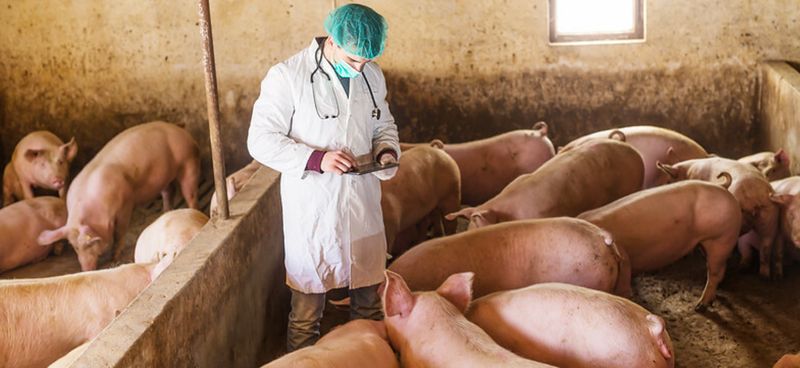
EU Intervention: A specialised task force of EU veterinarians and virologists has arrived in Bellaterra (Barcelona) to assist local authorities in containment and risk management.
"Sandwich Theory": Catalan officials now openly suspect the "patient zero" was a wild boar that consumed contaminated food waste—likely a ham sandwich or sausage brought from outside Spain—discarded by hikers or students near the university campus.
Trade Fracture Widens:
China: Confirmed it will apply "regionalisation," banning pork only from Barcelona province.
Total Bans: The UK, Mexico, and Taiwan maintain suspensions on broader Spanish pork imports, awaiting further clarity on the outbreak's containment.
Implications
Extended Uncertainty: The discovery of more infected carcasses suggests the virus may have been circulating undetected for weeks, increasing the risk that the containment zone will need to be expanded.
Market Bifurcation: Spanish exporters will face a logistical headache, segregating products for "regionalisation-friendly" markets (China, EU) vs. blocked markets.
Suggested Actions
Supply Chain Audit: UK and Japanese buyers should maintain alternative supplier relationships activated yesterday, as a quick resolution to the total ban appears increasingly unlikely.
Global Trade: Australian Beef Exports Smash Calendar Year Records
While Europe battles disruption, Australia is capitalizing on global shortages. New data shows Australian beef exports reached a record 1.398 million tonnes by the end of November 2025, up 15% year-on-year. The surge is driven by insatiable demand from the USA and China, putting the industry on track to exceed 1.5 million tonnes for the full year.
Implications
US Herd Void: The massive flow of Australian beef into the US (up significantly in 2025) confirms that the American cattle herd remains in a deep rebuilding phase, with domestic lean beef supplies insufficient to meet burger chain demand.
Grain-Fed Growth: Grain-fed exports specifically have hit a calendar year record of over 403,000 tonnes, signaling that Australia is successfully targeting premium marbling tiers in Asia, not just the grinding meat market.
Suggested Actions
Secure Volume: Buyers in Japan and Korea competing for Australian beef should consider locking in Q1 2026 volumes now. The aggressive pulling power of the US market is likely to keep export prices firm despite high Australian slaughter rates.
Sources
Schweine.net: Danish Crown plant neues Liefermodell bis Mitte 2026 (Verified Dec 3, 2025)
The Pig Site: EU vets deployed as swine fever spreads near Barcelona (Verified Dec 3, 2025)
Euractiv: Infected sandwich blamed for putting Spanish pork exports at risk (Verified Dec 3, 2025)
Beef Central: Australian beef exports smash records, entering ‘uncharted territory’ (Verified Dec 3, 2025)