

Published in News
Market Pulse: Special Edition - Spain's ASF Crisis
Military deployed, borders close, and a critical test for EU regionalisation

Executive Summary
The Spanish pork industry, a global powerhouse exporting over €8.8 billion annually, faces its most significant challenge in decades. The confirmation of African Swine Fever (ASF) in wild boars near Barcelona has triggered immediate military intervention domestically and a fractured response internationally. While China has agreed to a crucial regionalization deal, key markets like Japan and Mexico have enacted total bans, creating a volatile outlook for Q1 2026.
1. The Outbreak: "Contaminated Food" Hypothesis & Military Deployment
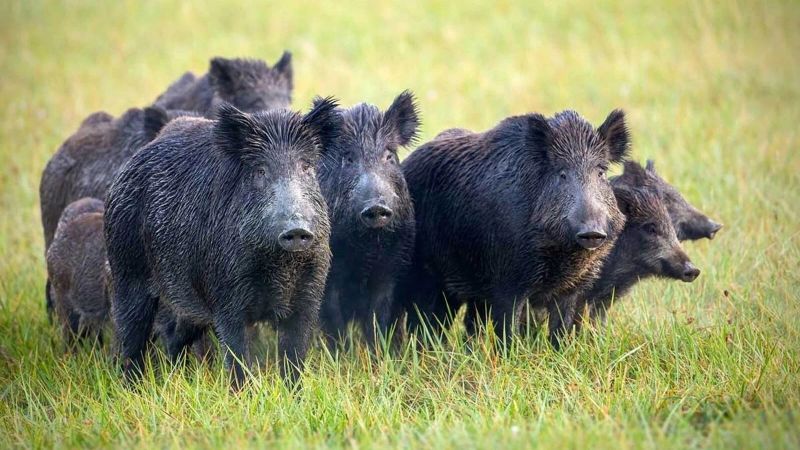
Authorities have confirmed 2 positive cases of ASF in wild boars in the Collserola natural park near Barcelona (Bellaterra), with a further 12 suspected cases currently undergoing testing. If confirmed, this would bring the total to 14 infected animals in a condensed area.
Zero Patient Theory: Catalan officials believe the virus likely entered via human-mediated contamination—specifically, a wild boar consuming food waste (such as a ham sandwich containing imported infected meat) left by a hiker or student, given the outbreak's proximity to the Autonomous University of Barcelona and urban trails.
Military & Local Response: The Spanish government has deployed 150 personnel from the Military Emergencies Unit (UME) to the zone. Their mission includes using sniffer dogs and drones to locate carcasses and seal off the perimeter. Locally, the Barcelona City Council (Guardia Urbana and Firefighters) has taken control of access points to the Collserola range to enforce the exclusion zone.
Political Fallout: The crisis has sparked political tension, with opposition parties (PP) demanding the immediate return of Catalan President Salvador Illa from an official trip to Mexico to personally manage the emergency.
2. Trade Impact: A Global Fracture
The international response has split into two distinct camps: those accepting "regionalisation" (banning only the affected area) and those imposing blanket national bans.
The "Regionalisation" Bloc (The Good News)
China: In a massive win for the sector, Beijing has agreed to restrict imports only from the province of Barcelona. Specifically, the Chinese General Administration of Customs has suspended imports from 12 specific companies operating in the affected province.
Economic Impact: China is Spain's most critical non-EU market, absorbing €1.1 billion in pork annually. Keeping this channel open for the rest of Spain is a vital lifeline.
European Union: Intra-EU trade remains open outside the immediate restriction zones. Italy has officially offered its collaboration and veterinary expertise to help Spain eradicate the focus, advocating for a coordinated European strategy.
The "Total Ban" Bloc (The Bad News)
Japan: Suspended all pork imports from Spain effective November 28. Japan is a high-value market for premium cuts and processed products.
Taiwan: Imposed a total ban on Spanish pork products and live pigs, threatening fines of up to $6,400 USD for illegal personal imports.
Mexico: Announced a suspension of Spanish pork imports, cutting off a key Latin American growth market.
United Kingdom: Defra has announced that all fresh pork from Spain will be held at Border Control Posts until further notice, effectively pausing trade while officials review the risk. This is a severe blow, as the UK imported 56,000 tonnes of Spanish pork in the first nine months of 2025 alone.
3. Economic Implications & Market Outlook
Catalan Exposure: The Catalan government estimates that €3 billion in regional pork exports are at risk, with €1 billion specifically tied to non-EU markets that are now in jeopardy.
Global Warning: The FAO (UN Food and Agriculture Organization) issued an urgent warning on Monday about the threat of transboundary animal diseases like ASF, estimating potential global losses of between $48 billion and $300 billion annually if outbreaks are not contained.
Domestic Oversupply: With the Japanese, UK, and Mexican markets temporarily closed, premium cuts usually destined for export will likely flood the domestic Spanish and European market. Expect downward pressure on Iberian pork prices in the short term.
UK Border Anxiety: The UK's National Pig Association (NPA) warns that this outbreak highlights the "softness" of post-Brexit border controls, fearing that illegal meat imports could bring the virus to British shores.
4. Suggested Actions for Industry Stakeholders
For Spanish Producers:
Biosecurity Audit: Strictly enforce "shower-in/shower-out" protocols. Ensure perimeter fencing is boar-proof.
Feed Safety: Verify the origin of all feed ingredients to rule out contamination risks.
For International Buyers:
Diversify Origin: Buyers heavily reliant on Spanish pork (especially in the UK and Japan) should immediately secure alternative volumes from Denmark, Germany, or the US to mitigate supply gaps in Q1.
Monitor Spot Prices: Look for potential spot-market bargains on premium Spanish cuts within the EU as exporters scramble to offload volumes banned from Asia.
Sources
La Razón: Peste porcina africana en España, en directo: última hora (Verified Dec 2, 2025)
The Pig Site: Eight new suspected ASF cases found as Spain battles outbreak (Verified Dec 1, 2025)
The Guardian: Spanish swine fever outbreak may be linked to food eaten by boar (Verified Dec 2, 2025)
Taiwan News: Taiwan bans pork from Spain after African swine fever outbreak (Verified Nov 29, 2025)
Pig World (UK): UK government responds to Spanish ASF outbreak (Verified Dec 1, 2025)
Meat Management: Government urged to ensure robust import controls after Spain ASF outbreak (Verified Dec 2, 2025)